
"Haiti coffee growing"
500 article(s) found

A trip to coffee beans
Following the five coffee giants Nestl é, Maxwell, Kraft, Newman and Ikham, Starbucks, which calls itself a "real coffee company", recently joined the ranks of coffee buyers in Yunnan, China, where it will establish its first coffee planting base in the world.
Where the coffee beans once fell.
Following the five coffee giants Nestl é, Maxwell, Kraft, Newman and Ikham, Starbucks, which calls itself a "real coffee company", recently joined the ranks of coffee buyers in Yunnan, China, where it will establish its first coffee planting base in the world.

A brief introduction to the cultivation of pure and gentle Santo Domingo boutique coffee beans, geographical location, climate and altitude
To trace the origin of Tibica, we should first talk about the coffee trees originally planted in Martinique. These trees were planted by Dominicans as far back as the early 18th century, so Dominica began growing coffee as early as that time. For a time, the Caribbean was almost synonymous with coffee production, but in recent years Cuba, Haiti and other producing areas have been severely damaged by Hurricane George.
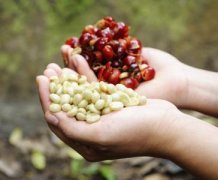
Brief introduction of planting Market Price of Santo Domingo Fine Coffee Bean with excellent acidity
Turning to the introduction of Dominican coffee, the most distinctive features are fresh and elegant, full of particles, excellent acidity and pleasant flavor (two colleagues agree with this). Such flavor characteristics are not only related to the variety and the quality of the soil, but also closely related to the picking and handling of raw beans. Dominica's coffee is selected by the most expensive manual method, workers.

A brief introduction to the treatment method of grinding degree and roasting degree of Dominica Santo Domingo coffee with strong taste
The origin of coffee in the Dominican Republic: the best coffee producing place in the Dominican Republic is the Barahona region in the southwest, but Juncalito and Ocoa also produce a kind of high-quality coffee-SantoDomingo coffee, the characteristic of Dominican Republic coffee: Dominican Republic coffee is fresh and light.

Basic knowledge of high-quality coffee beans in coffee producing countries
Salvadoran Coffee Type: Arabica Coffee output: 1.300.000 bags of Salvadoran coffee has a milder, less sour classic Sino-American flavor profile. The best high-altitude Salvadoran coffee is obtained from bourbon and Parkmora coffee trees. This kind of coffee is fragrant, complex, lively and delightfully mild. Strict high altitude growth: Salvadoran coffee

Introduction to the characteristics of high-quality coffee beans in Dominica Santo Domingo coffee flavor and taste varieties
In 1677, about 4,000 French lived in 11 villages in the west of the island. In 1697, France and Spain ceded the western part of the island to France according to the Leswick Treaty of the Alliance War, formally recognizing French sovereignty over Haiti in the western part of the Spanish island, and the eastern part of the Spanish island was called East Santo Domingo. France continues to develop its agricultural economy on the island of Hispaniola.

Introduction to the characteristics of Dominican Santo Domingo Coffee Flavor Manor with rich aroma and mellow taste
After Santo Domingo returned to Spanish rule, the local people gradually formed a consensus on independent statehood. On November 30th, 1821, the former Governor of Santo Domingo, General Jos Nez de Cceres, proclaimed the founding of the country, named Haiti, Spain, and expected to merge under the Greater Colombian State led by President Bolivar of South America. [3] but in February 1822, nine weeks later, Haiti's

Flavor description of Dominican coffee with mellow taste introduction to the characteristics of the taste of grinding degree
In 1677, about 4,000 French lived in 11 villages in the west of the island. In 1697, France and Spain ceded the western part of the island to France according to the Leswick Treaty of the Alliance War, formally recognizing French sovereignty over Haiti in the western part of the Spanish island, and the eastern part of the Spanish island was called East Santo Domingo. France continues to develop its agricultural economy on the island of Hispaniola.

A brief introduction to the market price of Dominica boutique coffee with excellent acidity and pleasant aroma
On the other hand, the high-quality coffee beans produced by some Dominican estates have rich aroma, mellow taste and moderately bright sour taste, and are often compared with those from Puerto Rico or Jamaica. The temperate climate of Dominica is conducive to coffee cultivation. The best places to grow coffee are the Barahona region in the southwest and St. St., the second largest city in Dominica.

Description of Dominica Coffee Flavor with mellow taste A brief introduction to the characteristics of the varieties of Grinding degree
In 1677, about 4,000 French lived in 11 villages in the west of the island. In 1697, France and Spain ceded the western part of the island to France according to the Leswick Treaty of the Alliance War, formally recognizing French sovereignty over Haiti in the western part of the Spanish island, and the eastern part of the Spanish island was called East Santo Domingo. France continues to develop its agricultural economy on the island of Hispaniola.

Santo Domingo coffee beans, coffee beans
To trace the origins of Tibica, we must first talk about the coffee tree originally planted in Martinique. These trees were planted by Dominicans as far back as the early 18th century, so Dominica began growing coffee as early as that time. For a time, the Caribbean was almost synonymous with coffee production, but in recent years Cuba, Haiti and other producing areas have been severely damaged by Hurricane George and have since changed.

Dominica coffee growing environment manors introduce the characteristics of Dominica coffee beans
Coffee in Dominica is grown in highlands and lowlands, and its taste is slightly different. The upland is sour, but the taste is rich; the lowland is less sour and tastes smoother. Boutique coffee has become popular in recent years. High-quality coffee beans produced by some Dominican estates have a rich aroma, mellow taste and moderately bright sour taste, and have been bought with the more famous Puerto Rico beans or teeth.

Description of the flavor of Honduran coffee beans with mild taste introduction to the grinding scale of the manor area
Despite well-known problems and fluctuating coffee quality from politically troubled lands, Haiti is still trying to produce some high-quality coffee. Most of the coffee produced in Haiti is grown in pure natural form, which is not intentional but the result of material shortage, because farmers are too poor to afford to kill.

A brief introduction to the history and culture of the origin and development of Dominican boutique coffee
Boutique coffee has become popular in recent years. High-quality coffee beans produced by some Dominican estates have a rich aroma, mellow taste and moderately bright sour taste, which are not far from the more famous Puerto Rico beans or Jamaican beans, and are also worth tasting. Dominica coffee beans have moderate acidity and rich fruit flavor. Western Hispaniola, 1500 m above sea level

Introduction to the description of Manor Flavor by the treatment method of the Grinding degree of Dominican Coffee
L'Or é al arrived in Santo Domingo in 1801. He abolished slavery on behalf of the French government. In 1802, Napoleon sent troops to conquer the whole island and ruled for several months. In October 1802, mixed-race and black people revolted against French rule and repelled the French army in 1803. On January 1, 1804, the rebels declared Santo Domingo independent and established the Republic of Haiti. But be defeated.

An introduction to fine coffee beans in the manor with a winding, smooth and smooth Dominican coffee flavor.
In 1677, about 4,000 French lived in 11 villages in the west of the island. In 1697, France and Spain ceded the western part of the island to France according to the Leswick Treaty of the Alliance War, formally recognizing French sovereignty over Haiti in the western part of the Spanish island, and the eastern part of the Spanish island was called East Santo Domingo. France continues to develop its agricultural economy on the island of Hispaniola.
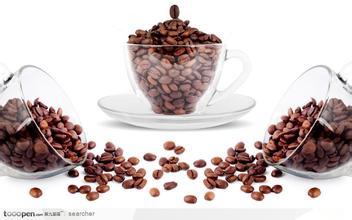
Coffee bean-shaped berry coffee in Tanzania the market for Tanzanian coffee
Despite well-known problems and the quality of coffee fluctuating from time to time, Haiti still tries to produce some high-quality coffee. Most of the coffee produced in Haiti is grown in pure natural form, which is not intentional but the result of material shortage.

Smooth and smooth Dominican Coffee Flavor and Taste introduction to the Fine Coffee production area
There are four major mountains in Dominica. The Cordillera Septentrional (northern mountain range) extends westward from the base mountain city on the northwestern border of Haiti to the northeastern Samina Peninsula. Cordillera Central (Central Mountains) extends from the multinational west of Haiti to the central part of the island of Spain, and gradually slows down to the south, du in the Central Mountains.
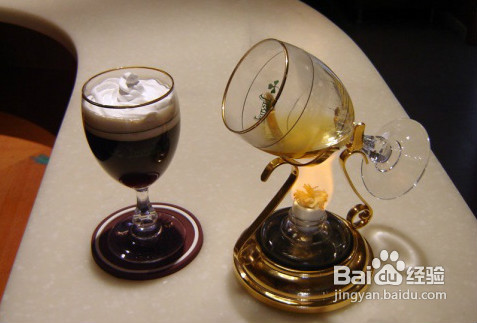
An introduction to the unique sour, bitter, sweet and mellow taste of Jamaican Blue Mountain Coffee.
The earliest coffee on the island of Jamaica came from Haiti in Latin America in 1728. By 1790, some coffee farmers among the refugees in exile from Haiti had settled in the Blue Mountains and brought coffee-growing technology here. In 1838, Jamaica abolished slavery and allowed liberated slaves to cultivate their own land. Free slaves moved to the mountains to specialize in planting.